
What Is a Vehicle Inspection Report? The Key to Buying Cars Online with Confidence
November 28, 2025 - 9:46:02 am
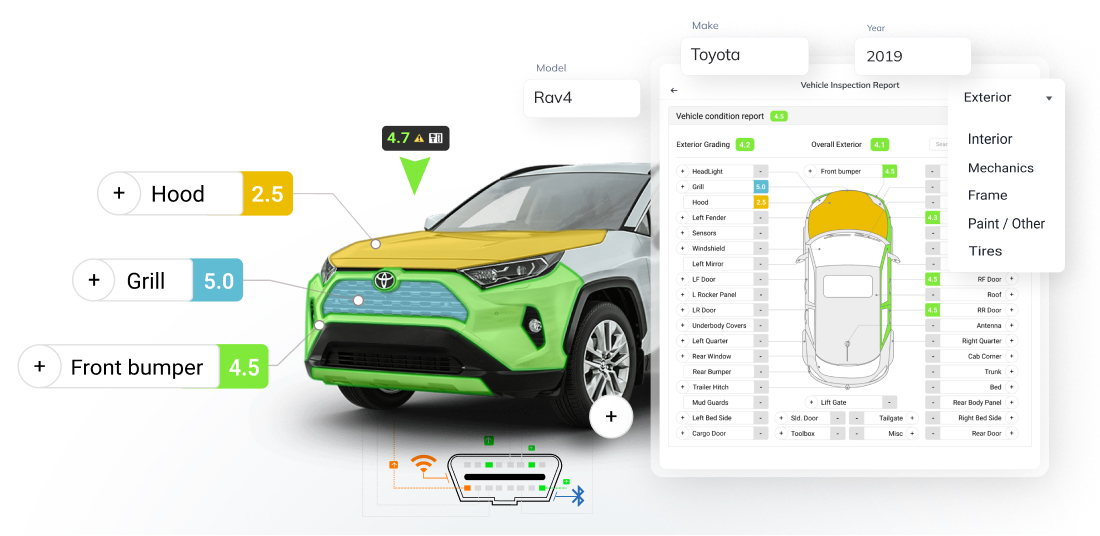
Buying a car used to be a physical experience. You would walk around the vehicle, kick the tires, pop the hood, and maybe even take it for a quick spin around the block. You relied on your eyes and ears to tell you if the car was a good deal or a lemon.
But today, the automotive world has moved online. Dealers and private buyers are purchasing vehicles from auctions thousands of miles away. You cannot touch the car, smell the interior, or hear the engine start. So, how do you trust what you are buying?
The answer lies in a crucial document known as the VIR.
If you are new to online auctions, you might be asking: what is vehicle inspection report, and why does every experienced bidder obsess over it? This guide will break down exactly what this report is, what is inside it, and why it is the most important tool for both buyers and sellers in the digital auction lane.
Defining the Vehicle Inspection Report (VIR)
At its simplest level, a Vehicle Inspection Report (VIR) is a detailed health record for a car. Think of it like a medical chart at a doctor’s office. It is an objective, unbiased assessment of the vehicle’s current condition. It is not a marketing brochure designed to sell you the car. It is a factual document created by a professional inspector who examines the vehicle from bumper to bumper.
The goal of the VIR is to bridge the gap between physical reality and the digital screen. It documents the good, the bad, and the ugly. It tells you if the paint is original, if the engine runs smoothly, if the air conditioning blows cold, and if there are any warning lights on the dashboard.
For online auctions, the VIR is the "source of truth." It replaces your eyes and ears, giving you the confidence to place a bid on a car you have never seen in person.
What Exactly Is Inside the Report?
A high-quality inspection report is comprehensive. It goes far beyond a simple "Pass" or "Fail." While every auction platform might organize the data differently, a standard report covers four main areas.
1. The Exterior Condition
The inspector walks around the entire vehicle to look for cosmetic damage. They aren't just looking for major wrecks; they are looking for the details. They will note scratches on the bumper, dents in the door panels, and chips in the windshield. They also check for previous repairs. Using a paint meter, they can measure the thickness of the paint to see if a panel has been repainted, which might indicate the car was in an accident years ago.
2. The Interior Assessment
This section covers everything inside the cabin. The inspector checks the condition of the seats (looking for rips or stains), the dashboard, and the carpets. They test the electronics: do the windows roll down? Does the radio work? Is the navigation system functioning? They also rely on their sense of smell to note any odors, such as cigarette smoke or mildew, which can be deal-breakers for many buyers.
3. The Mechanical Health
This is the part that matters most to your wallet. The inspector checks the engine oil, transmission fluid, and coolant. They start the car to listen for knocking sounds, ticking, or rough idling. They check for leaks underneath the vehicle. They also document the condition of the transmission—does it shift into gear smoothly, or does it hesitate?
4. Tires and Structural Integrity
Finally, the report looks at the foundation of the car. The inspector measures the tread depth of all four tires. This helps the buyer know if they need to spend money on new tires immediately. More importantly, they check the frame or unibody of the car for structural damage (rust or bent metal), which is critical for safety and value.
Why the VIR Is Critical for Buyers
For a buyer, the Vehicle Inspection Report is your shield against bad investments.
It helps you calculate the "Real Price."
When you look at an auction listing, you see the current bid. But that is not the total cost of the car. By reading the VIR, you might see that the car needs two new tires and a detail job to remove a stain. You can estimate those repair costs and subtract them from your maximum bid. This ensures you don't overpay.
It prevents "sight-unseen" anxiety.
Buying online can be stressful. A detailed report removes the mystery. When you know exactly what is wrong with the car, you aren't gambling; you are making an informed business decision.
It protects you after the sale.
If you buy a car and it arrives with a broken transmission that wasn't mentioned in the report, the VIR is your evidence. You can use it to file a claim (often called arbitration) to return the car or get money back. If the report said the car was fine, but it wasn't, the report holds the auction accountable.
Why the VIR Is Critical for Sellers
You might think that as a seller, you should hide the flaws to get a higher price. This is a common mistake. In the modern auction world, a detailed VIR is a seller's best friend.
Transparency builds trust.
Buyers are naturally suspicious. If a car listing has no inspection report or very few details, buyers will assume the worst. They will bid low to protect themselves against potential problems. However, if you provide a complete report that shows every scratch and dent, buyers feel safe. They know exactly what they are buying, which often leads to more aggressive bidding and higher final prices.
It reduces returns.
The worst nightmare for a seller is selling a car, collecting the money, and then having the buyer return it a week later because of an undisclosed issue. By disclosing everything upfront in the VIR, you protect yourself. The buyer cannot complain about a dent if the report clearly showed a photo of that dent.
The Role of Technology: Beyond Paper Checklists
In the past, inspection reports were handwritten notes on a clipboard. Today, technology has revolutionized this process.
Companies like Auction Streaming are leading this change by integrating advanced software into the inspection process. Modern reports are interactive digital experiences.
Instead of just reading "Engine runs well," you can now click a button and listen to a high-quality audio recording of the engine running. Instead of a blurry photo of a scratch, you get high-definition images that you can zoom in on. Some reports even include video walk-arounds, allowing you to see the car from every angle as if you were standing right next to it.
This level of detail is powered by sophisticated condition report software that ensures consistency. It guides the inspector through a standardized process so that nothing is missed.
The Verdict
So, what is vehicle inspection report? It is much more than a checklist. It is the currency of trust in the online automotive market.
Whether you are a dealer stocking your lot or a consignor selling a fleet, the VIR is the most valuable document in the transaction. For buyers, it offers peace of mind and financial protection. For sellers, it offers credibility and security. In an industry built on reputation, taking the time to understand and utilize detailed inspection reports is the smartest move you can make.
To get more insights visit our Blog page!