
SEO Basics Every Auction Website Should Have
August 21, 2026
Quick Summary: SEO for an auction website isn't the same game as retail dealer SEO — you're optimizing to be found by registered dealers and prospective consignors, not walk-in car shoppers. The basics still apply, though: fast, mobile-first pages, clean metadata, structured data on your listings, sensible site architecture, and content that answers the questions your audience is actually searching.
Why SEO Matters for a Wholesale Auction Website
Even a closed, dealer-only auction depends on people finding it online first — a dealer researching auction options, a consignor comparing where to move fleet vehicles, or a new market entrant typing "wholesale auto auction near me" before they ever register. SEO determines whether your site shows up in that moment or gets buried under a competitor's.
The mechanics are the same ones that apply to any content-heavy, inventory-driven website. The difference is intent: you're not chasing retail car-shopping traffic, you're optimizing to be found by the specific dealers and consignors who make up your actual customer base.
The SEO Basics Checklist for Auction Websites
1. Fast-Loading, Mobile-First Pages
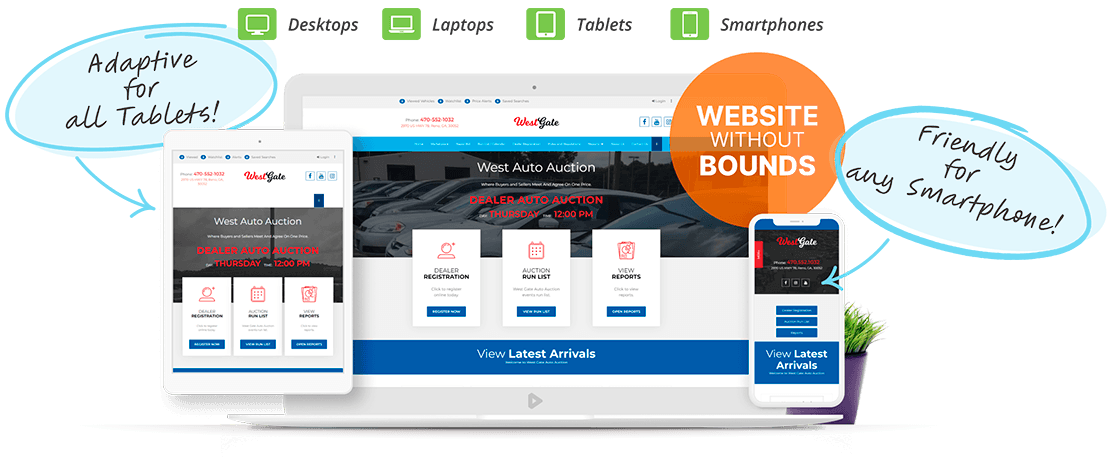
Google evaluates sites against Core Web Vitals — load speed (LCP), interactivity (INP), and visual stability (CLS) — and a slow or clunky mobile experience drags down rankings before content even factors in. If your site isn't already built responsively, that's worth fixing first, since everything else on this list matters less on a site people can't comfortably use on their phone.
2. Clear Title Tags and Meta Descriptions on Every Page
Every page — run-list pages, module pages, blog posts — needs a unique, descriptive title tag and meta description. These are what actually show up in search results, and a missing or duplicated one is one of the most common, most fixable gaps on inventory-heavy sites.
3. Structured Data on Every Listing
Schema markup (structured data) tells search engines exactly what's on a page — make, model, price, condition — rather than leaving them to infer it. Google's dedicated Vehicle Listing rich-result feature was phased out in 2025, but that doesn't make structured data optional: general Product/Vehicle schema still helps traditional search engines parse your listings correctly, and increasingly matters for how AI answer engines read and cite your site at all.
4. Clean Site Architecture and Internal Linking
Search engines (and visitors) should be able to reach any page on your site within a few clicks from the homepage. Linking related content together — a blog post about condition reports linking to your inspection module, a module page linking back to relevant articles — keeps both crawlers and readers moving through your site instead of hitting a dead end.
5. Local Search Signals
If your auction has a physical location, claiming and keeping a Google Business Profile current is part of the basics — accurate hours, address, and photos matter for anyone searching by region. This is worth a full pass in its own right; if you want the deeper dive, that's coming as its own guide.
6. Fresh, Educational Content
A site that only ever shows current inventory gives search engines nothing new to index between updates. Ongoing content — glossary explainers, buyer education, industry updates — gives both search engines and prospective dealers a reason to keep coming back, and it's the single easiest lever to keep pulling once the technical basics are in place.
Where AEO and GEO Fit Into the Basics Now
Traditional SEO is no longer the whole picture. Answer Engine Optimization (AEO) and Generative Engine Optimization (GEO) — writing and structuring content so AI tools like ChatGPT, Google AI Overviews, and Perplexity can read and cite it — are becoming part of the basics rather than an advanced add-on, as a meaningful and growing share of consumers now start their research inside a generative AI search experience rather than a traditional results page. The same fundamentals largely carry over: clean structured data, clear factual answers to specific questions, and content organized so a machine can parse it easily.
Why This Matters More for Independent, Dealer-Only Auctions
A national remarketing chain can outspend its way to visibility with paid search and brand recognition alone. An independent auction generally can't — which makes organic search one of the few channels where a smaller operation can compete on execution rather than budget. Getting the basics right consistently closes more of that gap than any single advanced tactic.
Frequently Asked Questions
Does SEO matter for a dealer-only auction that isn't public-facing?
Yes — the auction itself may be closed, but the people who need to find it (dealers researching options, consignors comparing where to sell) are searching publicly before they ever register.
Do I need schema markup on every vehicle listing?
It's worth applying consistently across listings rather than piecemeal, since inconsistent markup can create as much confusion for search engines as having none at all.
How is SEO different for an auction site vs. a retail dealer site?
The mechanics are the same, but the audience and intent differ — you're optimizing to reach dealers and consignors evaluating where to buy or sell wholesale, not retail shoppers comparing individual cars.
How long does it take to see SEO results?
Technical fixes like page speed or schema markup can show measurable movement within weeks, while content-driven gains — new pages ranking, AI tools citing your site — typically build over months rather than days.
Building These Basics Into Your Auction Site
None of these basics require an overhaul all at once — most auctions make the most progress by fixing the technical gaps first, then building out content steadily from there. Contact Auction Streaming if you want to see how a unified platform supports the site and content side of your auction alongside the auction management itself.