
What Is Sell-Through Rate and How to Improve It
September 4, 2026
Quick Answer: Sell-through rate is the percentage of vehicles that actually sell at auction compared to how many were run — vehicles sold divided by vehicles offered, times 100. A high sell-through rate means your reserves, condition data, and buyer pool are working together; a low one means vehicles are running across the block without finding a buyer, which drags down revenue per sale day even when the lane itself is moving fast.
What Is Sell-Through Rate?
Sell-through rate measures outcome, not speed: of every vehicle run across the block in a given sale, what percentage actually found a winning bid instead of going no-sale?
Sell-Through Rate = (Vehicles Sold ÷ Vehicles Run) × 100
This is a different metric from lane velocity, which tracks how fast vehicles move through the sale rather than whether they sell at all. An auction can move through its run list quickly and still post a weak sell-through rate if reserves are unrealistic or buyer turnout is thin — speed and outcome aren't the same thing.
What Drives Sell-Through Rate Up or Down
| Factor | Effect | What Helps |
|---|---|---|
| Reserve price vs. market value | Reserves set above real market value drive no-sales | Real-time market and pricing data pulled before the sale |
| Condition report completeness | Buyers hesitate or walk away on incomplete or unclear condition info | Standardized, photo-based inspections |
| Size of the buyer pool | Fewer bidders means fewer chances to hit reserve | Hybrid in-lane plus online bidding |
| Run-list timing | Listing against seasonal demand shifts can flatten sell-through | Tracking demand trends by vehicle segment |
None of these factors work in isolation — a vehicle with a fair reserve but a thin, unclear condition report can still no-sale, just as a well-documented vehicle with an unrealistic reserve will.
How to Improve Your Auction's Sell-Through Rate
1. Align Reserves With Real-Time Market Data
A reserve set from last month's book value is already stale. Pulling current market data into the consignor conversation before the sale keeps reserves realistic instead of aspirational — the single biggest lever on no-sale rates.
2. Standardize Condition Reporting Before the Block
Buyers who can't get a clear, consistent read on a vehicle's condition tend to sit out rather than bid blind. Standardized, photo-tagged inspections through VIR™ put the same information in front of every bidder ahead of time, so hesitation doesn't cost you the sale.
3. Expand the Buyer Pool With Hybrid In-Lane and Online Bidding
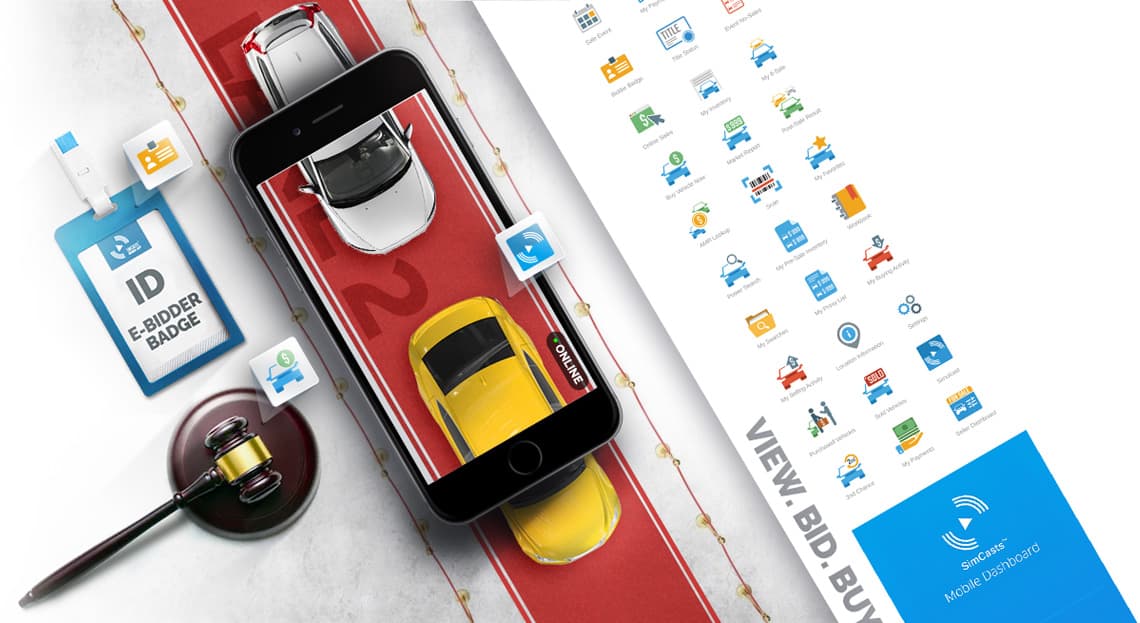
Sell-through rate is a function of how many real bidders see a vehicle, not just how many show up in person. SimCasts™ lets in-lane and online buyers compete in the same real-time window, widening the pool of people who can actually push a vehicle to its reserve.
4. Track Sell-Through by Segment, Not Just Overall
A healthy overall number can hide a weak segment dragging it down. Real-time dashboards through CAMS3™ and its analytics tools let you break sell-through out by make, body style, or price band, so you can fix the specific segment that's underperforming instead of guessing at the average.
Why Sell-Through Rate Matters More for Independent, Dealer-Only Auctions
A vehicle that runs and doesn't sell isn't neutral — it's a wasted lane slot, a consignor relationship under strain, and a re-list that costs time on a future sale day. For an independent auction without the volume of a national chain, every no-sale is a larger share of that day's total capacity than it would be for a bigger competitor, which makes sell-through rate one of the more consequential numbers to track closely.
Frequently Asked Questions
What's considered a good sell-through rate for a wholesale auto auction?
There's no single figure that applies across every vehicle segment and market condition, so it's more useful to track your own auction's rate over time and by segment than to chase a fixed industry benchmark.
How is sell-through rate different from lane velocity?
Sell-through rate measures whether a vehicle sold at all; lane velocity measures how fast it moved through the sale. An auction can be fast and still sell poorly, or slow and still sell almost everything it runs.
Does adding online bidders actually improve sell-through rate?
It can, since a wider buyer pool means more chances for a vehicle to reach its reserve — but only if the online experience is fast and reliable enough that remote bidders actually stay engaged through the sale.
How often should sell-through rate be tracked?
Tracking it sale by sale, and by vehicle segment, surfaces problems — like a specific body style or price band consistently under-selling — far faster than a monthly or quarterly rollup would.
Turning More of Your Run List Into Sales
Sell-through rate is the number that tells you whether everything else on sale day actually converted into revenue. Getting it right means aligning reserves, condition reporting, and buyer reach instead of treating them as separate problems. Contact Auction Streaming to see how a unified platform helps independent auctions convert more of what they run.