
How Long Does It Take to Implement a New AMS?
September 25, 2026
Quick Summary: For most independent, dealer-only auto auctions, the auction software implementation timeline runs about 4 to 10 weeks from signed agreement to the first live sale on the new system. Single-lane auctions with clean data sit at the short end. Multi-lane operations with simulcast, marketplace feeds, and years of consignor history take longer. Data cleanup and staff training, not software installation, usually set the pace.
If you run a weekly sale, the real question isn't just "how long?" It's "how many sale days will this touch?" Here, AMS means auction management software: the system that runs dealer check-in, lanes, clerking, settlement, and title. With a true-cloud AMS there are no servers to install, so your auction software implementation timeline is driven by three things: your data, your integrations, and your people.
The Auction Software Implementation Timeline, Phase by Phase
Step 1: Kickoff and Discovery (Week 1)
Confirm your lanes, sale days, buy and sell fee schedules, arbitration rules, and every system the AMS needs to connect to. Pick a target first-sale date, ideally outside your busiest month.
Step 2: Data Export and Mapping (Weeks 1–3)
Export dealer registrations, consignor accounts, open accounts receivable balances, and title-pending units, then map each field to the new system. Duplicate dealer records and inconsistent formats are the most common source of delay.
Step 3: Configuration and Integrations (Weeks 2–5)
Build lanes, fee tables, invoices, and checkout. Connect marketplace feeds through AuctionLink™, plus accounting and floor plan workflows, and set up simulcast cameras and clerk stations.
Step 4: Training and Mock Sales (Weeks 3–6)
Train clerks, auctioneers, the title office, and the front desk. Then run at least one mock sale using a real run list, so problems surface before dealers are bidding.
Step 5: Parallel Sale and Cutover (1–2 Sale Days)
Run your first live sale on the new AMS while keeping the legacy system available as a fallback. Once settlement and title paperwork reconcile cleanly, retire the old system.
Step 6: Stabilization (First 30 Days After Go-Live)
Expect small adjustments: report formats, fee rules, and dealer login questions. Plan for extra support coverage on your first few sale days.
What Speeds Up or Slows Down Go-Live
| Factor | Speeds it up | Slows it down |
|---|---|---|
| Data quality | Deduplicated dealer and consignor records | Duplicates, missing license dates, mixed formats |
| Lanes and sale frequency | One lane, one sale per week | Multiple lanes and several weekly sales |
| Integrations | AMS, simulcast, and CRM on one platform | Separate vendors that each need a connection |
| Infrastructure | Cloud platform on existing PCs and tablets | On-premise servers to install and configure |
| Decision-making | One project owner with sign-off authority | Fee schedules and workflows decided by committee |
| Training time | Staff freed up for mock sales | Training squeezed between live sales |
Notice that most of these factors sit on your side, not the vendor's. An auction that cleans its dealer list and names one decision-maker before kickoff can take weeks off its timeline.
Frequently Asked Questions
How long does it take to switch auction software providers?
Most independent auto auctions should plan for an auction software implementation timeline of roughly 4 to 10 weeks from signing to first live sale. Larger multi-lane operations with many integrations can run longer.
Will we have to cancel a sale during implementation?
No. A well-planned cutover happens between sale days, and the first live sale runs with the legacy system available as a fallback.
What slows down an auction software implementation the most?
Data quality. Duplicate dealer records, inconsistent fields, and unresolved title or receivables items take longer to fix than any software setup step.
Why do some guides say an AMS takes 60 to 120 days to implement?
Many of those guides describe association management software, which shares the "AMS" acronym but serves membership organizations. Their timelines don't reflect auction management software for auto auctions.
Plan Your Go-Live With Auction Streaming
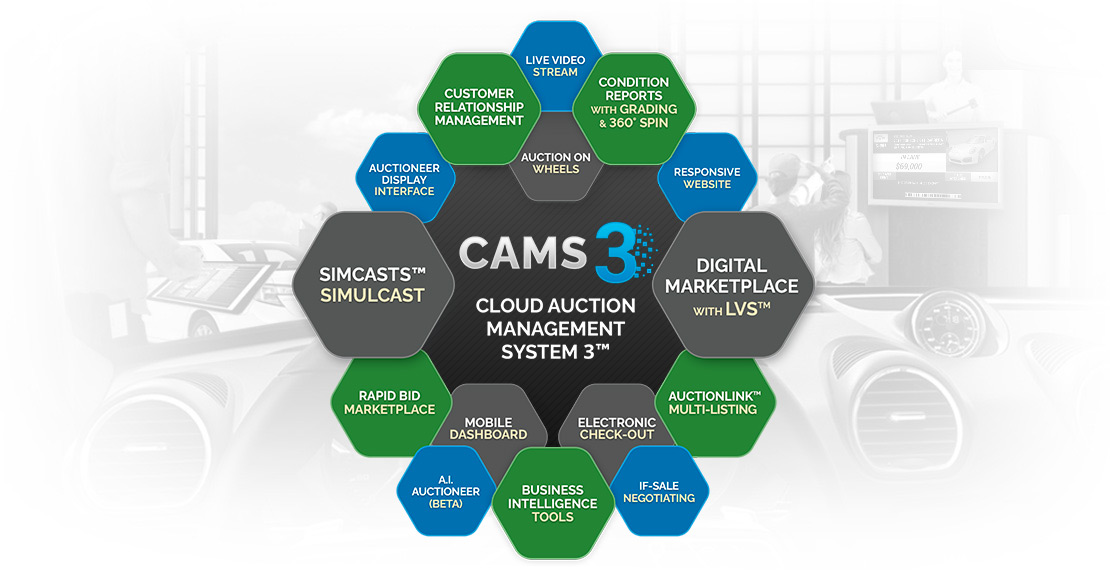
The fewer separate systems you have to connect, the shorter your auction software implementation timeline. Auction Streaming's CAMS3™ Cloud Auction Management System brings simulcast, AuctionLink™ marketplace posting, the Digital Marketplace, and CRM into one true-cloud platform, with no on-site servers to install.
Comparing providers first? Our guide to evaluating auction software covers what to check. When you're ready, contact our team to map out a go-live date around your sale calendar.